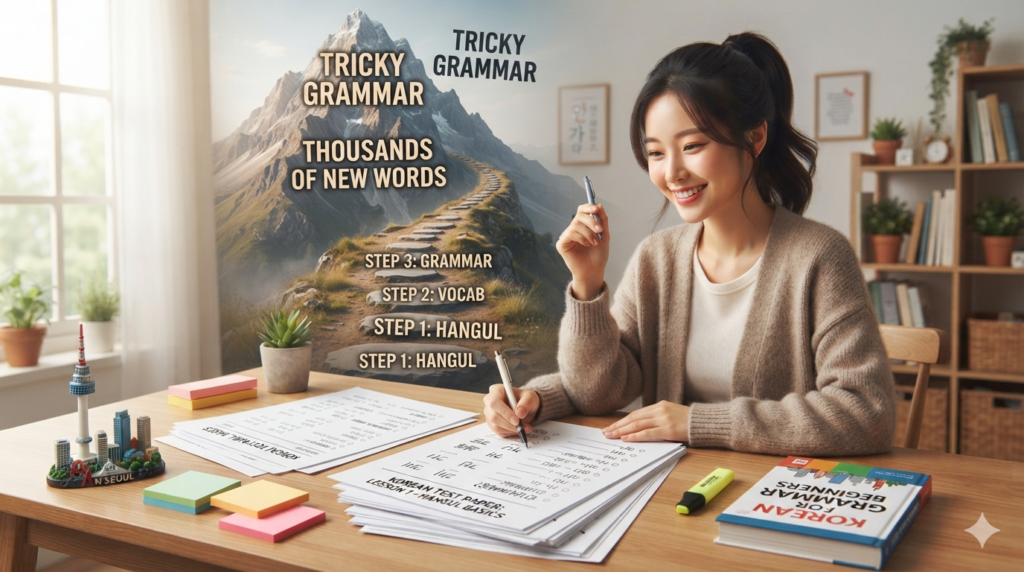

Learning a brand new language can feel like climbing a giant mountain all by yourself. You look up at the peak, and you see huge blocks of tricky grammar and thousands of new words. But what if I told you there is a secret map that makes the journey much easier? When I first started learning, I felt completely lost until a friend handed me a stack of korean test papers. Suddenly, the massive mountain turned into fun little steps I could climb one by one. Using these practice sheets changed everything for me. Instead of just staring at a textbook, I could see what I actually knew and what I needed to practice more. It gives you a clear goal for every single study session. Whether you are learning for a fun trip to Seoul or for a big school goal, having the right materials right in front of you keeps you moving forward. Let us dive in and look at how these helpful tools can make your language journey smooth and fun!
Why Practice Makes Perfect with Korean Test Papers
Think about learning to ride a bicycle for the very first time. You can read every book in the world about balance, but you will never truly learn until you hop on the seat and start pedaling. The same exact rule applies to learning a new language like Korean. Working through korean test papers gives you that hands-on riding practice. It takes all those random words floating in your head and forces you to use them in real sentences. I remember spending weeks memorizing colors and food names, but the moment I tried a real practice quiz, my mind went totally blank. That is completely normal! Making mistakes on a practice sheet is actually a good thing because it helps your brain remember the right answer for next time. When you test yourself often, you stop being scared of making errors. You start to see patterns in how sentences are built. It turns out that getting a red mark on a test paper is one of the best teachers you will ever have on your language-learning adventure.
Discovering Your Level with Simple Assessment Sheets
Before you start running a marathon, you need to know if you can run one mile or five miles, right? Language learning works the exact same way. If you pick a study book that is way too hard, you will feel frustrated and want to quit. If it is too easy, you will get bored and stop paying attention. This is where beginner korean test papers act like a helpful compass. They show you exactly where you stand right now. I always tell my students to take a low-pressure diagnostic quiz on day one. It does not matter if you only get two questions right out of twenty. That low score is just a starting line, not a grade on your smartness! Once you know your exact starting level, you can pick the right stories, flashcards, and exercises. You save so much time because you are no longer guessing what to study. You can focus your energy directly on the exact grammar points and vocabulary words that match your current skills.
Boosting Your Memory with Real Exam Scenarios
Our brains are super smart, but they love to take shortcuts. When you look at a vocabulary list in a book, your eyes might just glide right over the words, and you think, “Oh yeah, I know that one.” But do you really know it? Regular korean test papers force your brain to wake up and dig deep into your memory bank. There is no answer key sitting right next to the question to rescue you. You have to think hard, recall the spelling, and make a choice. This active brain workout builds strong memory pathways. I used to make my own mini-quizzes on small sticky notes and place them all over my desk. Every time I sat down, I had to answer three quick questions before I could touch my computer. That simple trick helped me remember verbs and particles ten times faster than normal reading. When you put yourself in a test-like situation, even for five minutes, your focus shoots straight up and your memory gets much sharper.
Breaking Down Reading Comprehension Step by Step
Reading a full paragraph in a brand new alphabet can feel like staring at a secret spy code. At first, you might recognize a few letters, but the meaning of the whole sentence slips away like water through your fingers. Using korean test papers with short reading sections helps you crack that code piece by piece. Start with super short stories made for kids or beginner students. Read one sentence slowly, find the words you know, and guess the ones you do not know. Then, look at the questions at the bottom of the page. Those questions are like little flashlight beams showing you what parts of the story matter most. Did you notice who went to the store? Did you catch what they bought? When you answer these questions, you train your eyes to scan for important details instead of getting stuck on every single unfamiliar syllable. Over time, those long paragraphs will start looking less like secret codes and more like friendly greeting cards!
Mastering Essential Grammar Without Getting Confused
Grammar rules can sound like a boring list of complicated math formulas with strange names. Words like particles, conjugations, and honorifics can make your head spin before you even drink your morning tea. But working with korean test papers turns dry grammar rules into fun little puzzles. Instead of memorizing a long rule about how to connect two verbs, you get to see how native speakers actually use that rule in a real sentence. When you fill in the blank on a test sheet, you test your understanding instantly. If you choose the wrong ending, the feedback is right there to guide you. I used to keep a special notebook just for grammar mistakes I found on my practice tests. Writing them down in a fun, colorful way made the rules stick in my head. Before long, choosing the right verb ending felt as natural as tying my shoes. You do not need to be a grammar professor; you just need a little bit of steady practice every week.
Expanding Your Daily Vocabulary Naturally
You can never have too many words in your toolbox when you are exploring a new language. But trying to memorize a list of five hundred random words in one afternoon is a fast ticket to a headache. A much smarter way to grow your word power is by using korean test papers that focus on everyday themes like food, weather, family, and hobbies. When you see a new word inside a fun multiple-choice question or a matching game, it gets connected to a real context. For example, learning the word for apple is okay, but seeing it inside a question about what someone eats for breakfast makes it unforgettable. Whenever I stumbled upon a new term during my practice sessions, I would draw a silly little picture next to it on the margin of the paper. That silly sketch combined with the test question made the vocabulary stay in my brain forever. Small, steady steps win the race every single time!
Training Your Ears with Audio-Linked Practice Materials
Reading words on a flat white page is only half of the fun. To truly connect with a language, you have to hear how real people speak on the streets, in shops, and in friendly conversations. Many modern korean test papers come with helpful audio clips or listening tracks that you can play right on your phone or computer. These listening exercises teach your ears to catch fast words, friendly greetings, and polite expressions. When I first tried listening tests, people spoke way too fast, and I missed half the sentences. So, I started pressing the pause button, repeating the words out loud, and replaying the audio three times. Speaking the words out loud while doing your test practice helps your tongue and mouth get used to new sounds. It bridges the gap between what you see on the paper and what you hear in real life, making you feel much more prepared for actual chats.
Tracking Your Progress and Celebrating Small Wins
It is very easy to feel like you are not getting any better at learning a language, especially on days when your brain feels tired. That is why keeping a folder of your old korean test papers is one of the best motivational tricks you can ever try. Once a month, pull out a practice sheet from three months ago and look at how easy the questions look to you now. You will be amazed at how far you have traveled! On my desk, I kept a big green folder filled with all my completed tests. Whenever I felt stuck or down about my progress, I opened that folder and looked at all the red corrections I had turned into green checkmarks. Celebrate those tiny victories with your favorite snack or a nice walk outside. Language learning is a wonderful journey filled with tiny steps, and every single completed practice sheet proves that you are getting smarter and stronger every day.
Creating Your Own Fun Mini-Quizzes at Home
Why let teachers and textbook authors have all the fun making quizzes? One of the most creative ways to boost your skills is by designing your own korean test papers for a study buddy or even for yourself! When you have to write down the questions, pick the right answers, and create tricky wrong choices, you have to understand the topic completely. I used to make custom word puzzles and matching games for my friends when we studied together on weekends. Designing the questions made me look at grammar and vocabulary from a whole new angle. It turns you from a passive student into an active language creator. You can make a quick ten-question quiz about your favorite foods, your pets, or your daily morning routine. It adds a wonderful spark of creativity to your study routine, turning a quiet evening of review into an interactive game night.
Frequently Asked Questions
What are the best ways to find beginner Korean test papers?
You can find wonderful beginner practice sheets online through free language learning websites, community study groups, and mobile apps. Many cultural centers also share free printable pdf guides that feature simple questions, vocabulary matching, and fun beginner exercises tailored for people starting from scratch.
Are test papers good for learning the Korean alphabet?
Yes, absolutely! Special alphabet practice sheets help you connect letters to sounds. By tracing letters and matching them in simple quiz formats, you train your eyes and hands to recognize the writing system much faster than just reading plain text.
How often should I take practice tests while studying?
Taking a short quiz two or three times a week works wonders for your memory. You do not need hours of testing; even a quick ten-minute review session keeps your brain active and helps you remember new words and rules without feeling overwhelmed.
Can I use these practice exams if I am studying all by myself?
Yes! Most self-study materials come with detailed answer keys in the back or on the next page. This lets you check your work instantly, understand your mistakes right away, and guide your own learning journey at whatever speed feels comfortable for you.
What should I do when I get a low score on a test?
Never feel discouraged by a low score! Treat it like a helpful treasure map. A low score simply shows you exactly which pages to review next. Go back to those specific notes, study the rules again, and try the exact same practice quiz a few days later to see your score go up.
Do I need to memorize thousands of words before taking a test?
Not at all! You can start taking simple tests right from your very first week of learning. Starting early with basic vocabulary and short sentences helps you build confidence and makes the learning process feel much more like an interactive game than a chore.
Conclusion
Embarking on your Korean language adventure is an exciting journey filled with wonderful discoveries, new words, and fun challenges. By adding regular korean test papers to your daily study routine, you turn complicated grammar rules and long vocabulary lists into manageable, fun steps. Remember to take things at your own comfortable pace, celebrate every tiny win along the way, and never be afraid of making mistakes on your practice sheets. Every single answer you write down brings you one step closer to speaking with confidence and clarity. Grab your favorite notebook, brew a warm cup of tea, and try out a fun practice quiz today. Your future self will thank you for starting this amazing adventure right now!