
The manybar goatfish, scientifically known as Parupeneus multifasciatus, is an extraordinary marine species beloved by divers, marine biologists, and reef enthusiasts alike. Often spotted amid coral reefs and sandy lagoons throughout the Indo‑Pacific, this fish’s striking pattern of bars and its inquisitive behavior make it both a visual delight and a fascinating subject of study. Whether you’re an aquarium hobbyist, a scientific researcher, or simply someone curious about marine life, understanding the manybar goatfish opens a window into the complex ecology of tropical reef systems.
In this comprehensive expert guide, we’ll explore the manybar goatfish from every angle — anatomy, behavior, habitat, diet, aquarium care, conservation, cultural significance, and more — so you walk away with a definitive resource on this captivating species.
What Is the Manybar Goatfish?
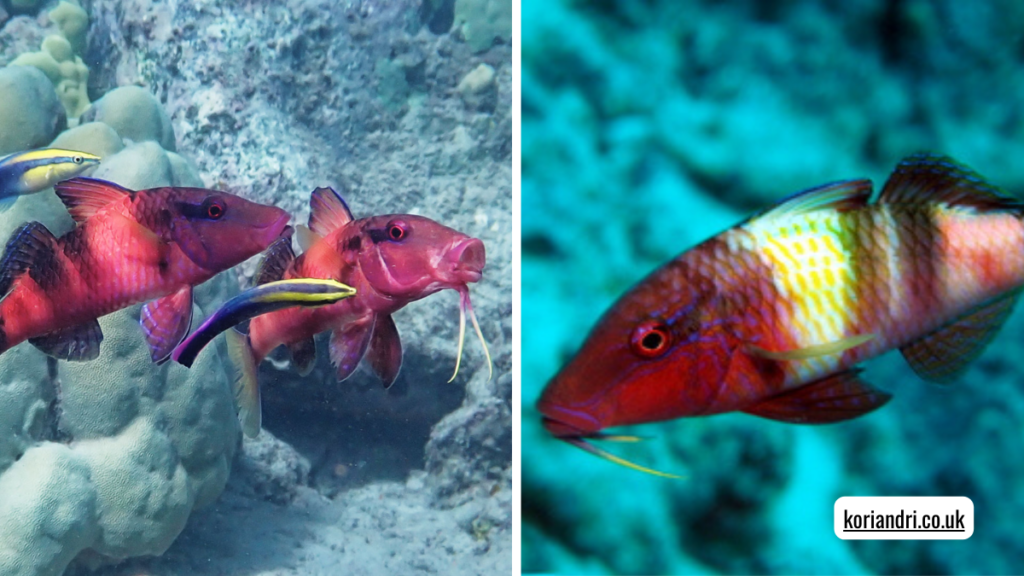
The manybar goatfish (Parupeneus multifasciatus) belongs to the family Mullidae and is recognized by multiple vertical bars across its body and a pair of sensory barbels beneath its chin. These “whiskers” help it sift through sand and rubble in search of food. The species is found across the Indo‑Pacific region, from Christmas Island to southern Japan, Hawaii, and beyond.
Goatfish are known for their hardy nature and adaptability. In the wild, manybar goatfish graze actively on benthic invertebrates — such as crustaceans and worms — and sometimes small fish. Their day‑foraging behavior and striking coloration make them a popular sight for snorkelers and divers in tropical seas.
Anatomy and Appearance
The manybar goatfish earns its name from its distinctive pattern of wide bands or bars that traverse its body. Usually, it displays three to four broad bars against a backdrop that ranges from pale gray to reddish hues, with a dark band near the eye. This patterning helps distinguish it from similar reef species.
A pair of sensory barbels on its lower jaw is a key anatomical feature. These barbels function much like tactile sensors, probing the seabed for hidden prey. The fish typically reaches lengths up to about 30–35 centimeters (roughly 12–14 inches), making it moderately sized compared with other reef dwellers.
Habitat and Distribution
The manybar goatfish is widespread throughout the tropical Indo‑Pacific. Its range extends from the eastern Indian Ocean — near places like Christmas Island and the Cocos Keeling Islands — across to the Pacific, including southern Japan, the Hawaiian Islands, and as far south as Lord Howe and Pitcairn Islands.
This species thrives in diverse reef environments, from shallow lagoon flats to deeper coral reef slopes, inhabiting depths from just a few meters to over 160 meters. It favors areas with mixed substrates such as sand, rubble, and coral, which provide both feeding grounds and shelter.
Feeding Behavior and Diet
The manybar goatfish is primarily a benthic forager. During daylight hours, it uses its barbels to sift through sandy or rubble substrates, detecting small organisms such as shrimp, crabs, worms, and even fish eggs buried in sediment. This feeding strategy allows it to exploit a range of food sources that many other reef fishes overlook.
In aquarium settings, replicating this natural foraging behavior is critical to its health. A varied diet consisting of meaty foods — such as mysis shrimp, brine shrimp, squid, and finely chopped seafood — should be offered multiple times per day to match the fish’s activity patterns.
Behavior and Social Structure
Manybar goatfish are generally diurnal and often seen foraging alone or in small, loose groups. Although not highly territorial, their social interactions can vary based on food availability and reef structure. They are also known to exhibit interesting ecological interactions; for example, in the presence of other curious species such as octopuses, goatfish may follow their movements to take advantage of disturbed prey.
In the wild, their behavior contributes to nutrient cycling on the reef floor. By stirring up sediment and foraging broadly, they help redistribute nutrients and create microhabitats that support other organisms.
Aquarium Care and Compatibility
Keeping a manybar goatfish in a home aquarium is rewarding but not without challenges. Because of their active foraging nature, they need tanks with ample open space and plenty of sand or soft substrate for natural behavior. A minimum aquarium size of 150 gallons is often recommended to accommodate their size and activity level.
While generally peaceful, they are best kept with larger, non‑aggressive tank mates. Invertebrates such as small shrimp or delicate corals may be at risk, as the goatfish’s foraging can unintentionally disturb or consume them.
Growth, Lifespan, and Reproduction
The manybar goatfish reaches maturity at sizes around 17–18 centimeters, although larger adults can grow up to around 35 centimeters in total length. Its lifespan in the wild can be several years, though specific longevity data vary with environmental conditions.
Reproduction in manybar goatfish follows typical reef fish patterns, with pelagic larvae drifting in ocean currents before settling on suitable habitat. This larval phase, which generally lasts several weeks, contributes to the species’ wide distribution throughout the Indo‑Pacific.
Ecosystem Role and Importance
The manybar goatfish plays a significant role in reef ecosystems. By stirring up sand and rubble in their quest for food, these fish promote sediment turnover and help maintain the health of benthic habitats. They also serve as prey for larger reef predators, making them integral to the food web.
Moreover, their foraging behavior can influence the distribution of microorganisms and benthic invertebrates, indirectly affecting reef biodiversity. This ecological function underscores their importance beyond simple aesthetic appeal.
Conservation Status
The IUCN lists the manybar goatfish as Least Concern, thanks to its broad distribution and stable population. While it is harvested in some regions — including Hawaii — for food and aquarium trade, current levels are not considered a critical threat.
Nonetheless, reef conservation efforts remain crucial. Healthy coral ecosystems ensure that species like the manybar goatfish have suitable habitat, food sources, and breeding grounds.
Manybar Goatfish Scientific Comparison Table
| Feature | Manybar Goatfish (Parupeneus multifasciatus) | Typical Reef Fish | Role in Ecosystem |
|---|---|---|---|
| Typical Size | 30–35 cm | Varies widely | Medium trophic ruler |
| Habitat | Indo‑Pacific reefs, lagoons | Global reefs/lagoons | Reef sediment turnover |
| Diet | Small crustaceans, worms, eggs | Herbivores & carnivores | Benthic predator/scavenger |
| Behavior | Diurnal foraging with barbels | Varies | Influences nutrient cycling |
| Aquarium Suitability | Moderate‑Difficult | Easy‑Moderate | Displays active natural behavior |
| Conservation | Least Concern | Varies by species | Reinforces reef health |
Scientific and Cultural Significance
Though primarily of ecological and marine biological interest, the manybar goatfish also carries cultural value in some regions. In Hawaii, for example, it is known locally as “moano.” In traditional fishing communities, goatfish have been harvested for food or featured in local lore, reflecting the species’ long‑standing presence in human coastal interaction.
Many marine enthusiasts and divers also view goatfish as ambassadors of reef health; spotting a healthy population often signals a well‑balanced ecosystem.
Conclusion
The manybar goatfish is more than just a striking reef fish — it exemplifies the dynamic complexity of coral reef ecosystems. From its distinct appearance and active foraging behavior to its ecological role and cultural presence, this species captures the intersection of biology, environment, and human fascination. Whether you’re diving in tropical seas or considering a reef aquarium, understanding the manybar goatfish enriches your appreciation of marine life and underscores the value of healthy reef habitats worldwide.
FAQ About Manybar Goatfish
What does the manybar goatfish look like?
The manybar goatfish has a pattern of three to four wide bars across its body, a dark streak near its eye, and sensory barbels beneath its chin used for foraging.
Where is the manybar goatfish found?
The manybar goatfish is native to the Indo‑Pacific, including areas from the eastern Indian Ocean to Japan, Hawaii, and southern Pacific islands.
What does a manybar goatfish eat?
A manybar goatfish primarily eats small benthic organisms such as shrimp, crabs, worms, and other invertebrates it finds by sifting sand.
Can the manybar goatfish be kept in an aquarium?
Yes, but the manybar goatfish requires a large tank with plenty of space and substrate for natural foraging behavior; it’s best for experienced aquarists.
Is the manybar goatfish endangered?
No, the manybar goatfish is classified as Least Concern due to its widespread distribution and stable populations.