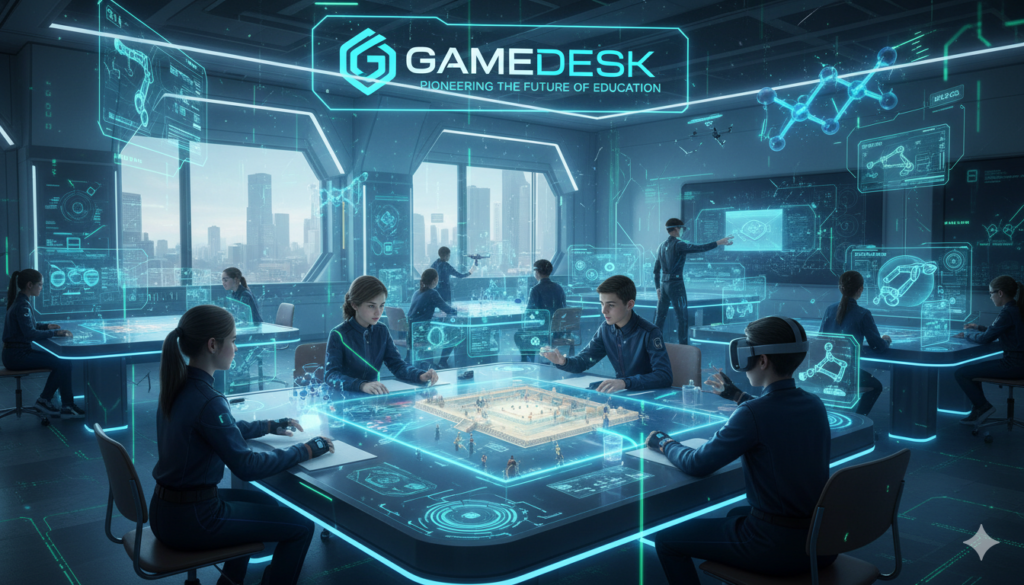

Imagine a classroom where the “quiet down” bell never rings because everyone is too busy flying through the clouds as an albatross or building a digital city from scratch. This isn’t a scene from a sci-fi movie; it’s the reality created by GameDesk, a pioneer in the world of modern education. For years, we’ve been told that “playtime” and “study time” are two different things. But what if they were the same? By blending a gamedesk non-profit education play model, this organization has shown that kids learn best when they are actually having fun.
The magic happens when we stop looking at games as a distraction and start seeing them as a tool. When a student uses gamedesk non-profit education play or games, they aren’t just memorizing facts for a test. They are solving real problems, thinking like engineers, and failing safely until they succeed. This hands-on approach builds confidence and a deep love for subjects like math and science. It’s about giving every child the chance to be the hero of their own educational journey.
Who is Behind GameDesk?
To understand the impact of this movement, we have to look at the people and the mission. Founded out of research at the University of Southern California (USC), the organization has always focused on making learning feel “natural.” Below is a quick look at the core details of this innovative group.
| Feature | Details |
| Organization Name | GameDesk, Inc. |
| Founder / CEO | Lucien Vattel |
| Year Established | 2010 |
| Focus Area | K-12 STEM Education, Game-Based Learning |
| Key Partners | Bill & Melinda Gates Foundation, AT&T |
| Major Projects | PlayMaker School, Educade, Aero, Dojo |
| Mission | To revolutionize education through evidence-centered game design. |
Why a Gamedesk Approach Matters in Schools
In a traditional classroom, a teacher might talk for an hour while students take notes. With gamedesk, that dynamic flips. Students become active participants. Instead of reading about aerodynamics, they play a game called Aero where they control a bird’s wings. They feel the lift and the drag. This “experiential” learning sticks in a child’s brain much longer than a paragraph in a textbook ever could.
Breaking Down the Gamedesk Non-Profit Education Play Model
The core of this model is simple: engagement leads to mastery. As a gamedesk non-profit education play entity, the goal isn’t to make money—it’s to make a difference. They provide free or low-cost tools to schools that might not have the budget for fancy tech. By removing the price barrier, they ensure that kids from all backgrounds can access high-quality learning games that challenge their minds.
Learning Through Gamedesk Non-Profit Education Play or Games
When we talk about gamedesk non-profit education play or games, we are talking about “Serious Games.” These aren’t just “chocolate-covered broccoli” (boring lessons with a points system). These are immersive worlds. For example, in their Dojo game, students learn to control their emotions and heart rates. It’s biology and psychology wrapped in an adventure that feels rewarding and meaningful.
The Role of STEM in Modern Play
Science, Technology, Engineering, and Math (STEM) can be scary for many kids. Gamedesk removes that fear. By turning complex math equations into game mechanics, students solve problems without even realizing they are “doing math.” This builds a foundation of logic and critical thinking that prepares them for the jobs of the future, all while they are simply playing.
How PlayMaker School Changed the Game
One of the biggest successes for the team was the launch of the PlayMaker School. This was a physical “lab” school where the entire curriculum was built around game design and digital authorship. It proved that when you give kids agency and let them build things, their attendance goes up and their grades follow. It’s a blueprint for what the “school of the future” should look like.
The Importance of Failing Fast and Learning Faster
In a video game, when you “die,” you just restart the level. You learned what didn’t work, and you try a new strategy. Gamedesk brings this “failure is okay” mindset to the classroom. In a typical school, a bad grade feels like an end. In a game-based environment, a mistake is just data. This builds resilience—a trait that is just as important as knowing how to solve a physics problem.
Reaching the “At-Risk” Student Population
Not every child thrives in a standard desk-and-chair setup. Gamedesk has done incredible work with students who have dropped out or are struggling in the juvenile justice system. For these kids, traditional school has failed them. By using gamedesk non-profit education play, these students find a new way to connect with the world and realize they are actually quite smart and capable.
Educade: A Library of Free Learning Tools
Sharing is caring, and the gamedesk team took this to heart by creating Educade. This is a massive online portal where teachers can find lesson plans that use games, apps, and “maker” activities. It’s like a giant toy box for educators, filled with ways to make tomorrow’s history or science lesson the highlight of a student’s week.
The Future of Digital Authorship
It’s not enough to just play games; gamedesk wants kids to make them. When a student creates a game, they are learning coding, storytelling, and user experience design. This shift from “consumer” to “creator” is a powerful one. It gives young people the tools to tell their own stories and solve problems in their own communities using technology.
Personal Insight: Why I Believe in This
As someone who spent a lot of time “daydreaming” in class, I wish I had a gamedesk in my school. I remember learning more about history from strategy games than from my social studies teacher. Seeing a non-profit take this concept seriously and back it with scientific research is a breath of fresh air. It respects the way children naturally want to interact with the world.
Frequently Asked Questions
1. Is GameDesk still active today?
While some of their specific pilot schools have changed, the research and the tools (like Educade) continue to influence how schools use game-based learning globally.
2. Do kids actually learn, or do they just play?
They definitely learn! Research shows that “stealth learning”—where the educational content is baked into the game mechanics—often leads to better retention than traditional methods.
3. Is this only for kids who are good at computers?
Not at all. Many gamedesk activities involve physical movement, “maker” projects with cardboard and glue, and social teamwork that doesn’t require a screen.
4. Can parents use these tools at home?
Yes! Platforms like Educade were designed to be used by both teachers and parents to find engaging ways to support a child’s curiosity outside of school hours.
5. Why is it a non-profit?
Being a non-profit allows the organization to focus on impact and accessibility. They can partner with foundations to bring high-tech tools to low-income areas without worrying about a profit margin.
6. Does this work for subjects like English or History?
Absolutely. While they have a strong STEM focus, the principles of narrative and “role-play” are perfect for teaching literature, empathy, and historical perspectives.
Conclusion: Let’s Keep the Game Going
The work of gamedesk reminds us that education doesn’t have to be a chore. By embracing a gamedesk non-profit education play mindset, we can turn every lesson into an adventure. Whether it’s through gamedesk non-profit education play or games or simply encouraging a more curious way of thinking, the goal remains the same: to help kids love learning again.