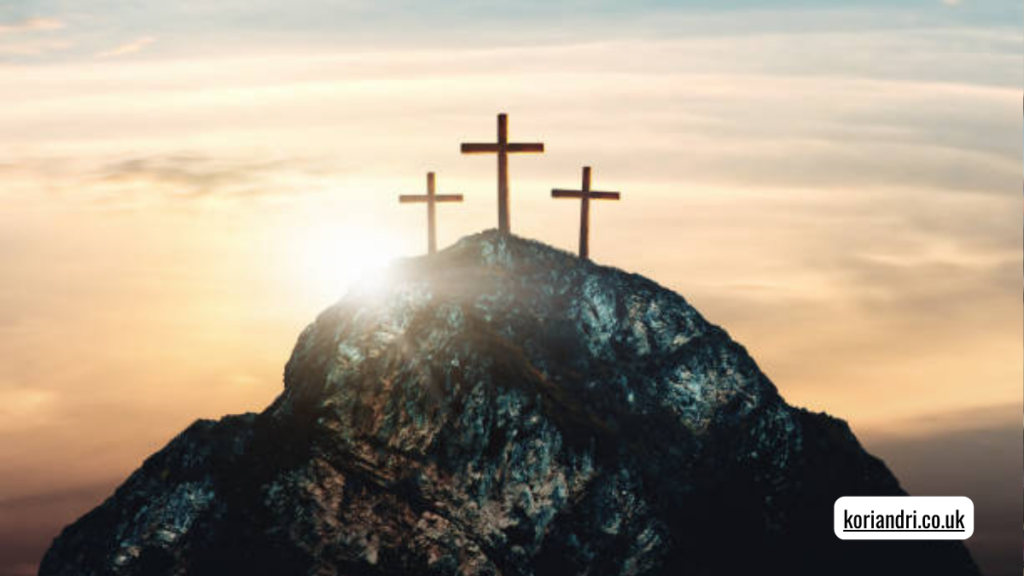

Few places on earth carry the spiritual gravity and historical intensity of Calvary in Jerusalem. Revered by billions of Christians as the site of the crucifixion of Jesus Christ, this small rocky outcrop has shaped theology, pilgrimage, architecture, and global devotion for nearly two thousand years. It stands not merely as an ancient location, but as a living symbol embedded in faith, culture, and collective memory.
To understand Calvary in Jerusalem is to explore the intersection of scripture, archaeology, empire, devotion, and modern geopolitics. This comprehensive guide examines its historical foundations, biblical context, archaeological debates, denominational interpretations, and its enduring significance in contemporary Christianity.
Historical Origins of Calvary in Jerusalem
The site traditionally identified as Calvary in Jerusalem lies within the complex of the Church of the Holy Sepulchre in the Old City. In the first century, this area was located outside the city walls, consistent with Roman practices of executing criminals beyond urban boundaries.
The transformation of this execution site into Christianity’s holiest shrine began in the fourth century under Emperor Constantine, when his mother Helena identified the location and commissioned a basilica over it, forever altering Jerusalem’s sacred landscape.
Golgotha and Its Meaning in Scripture
The New Testament refers to the site as Golgotha, a term derived from Aramaic meaning “place of the skull.” The Gospels of Matthew, Mark, Luke, and John each recount Jesus’ crucifixion at this location, situating it within the broader narrative of redemption.
In Latin, Golgotha became Calvaria, meaning skull, which later evolved into “Calvary.” While the name changed linguistically, the theological weight of Calvary in Jerusalem remained central to Christian doctrine across centuries.
The Church of the Holy Sepulchre and the Identified Site
Today, the traditional location of Calvary in Jerusalem sits inside the Church of the Holy Sepulchre. This massive ecclesiastical complex also includes the traditional tomb of Jesus, making it one of Christianity’s most revered pilgrimage destinations.
Within the church, visitors ascend a staircase to a chapel marking the precise rock outcrop believed to be Golgotha. Pilgrims touch the exposed stone beneath the altar, connecting physically and spiritually to the crucifixion narrative.
Roman Crucifixion Practices and Historical Context
Crucifixion was a brutal Roman method reserved for slaves, rebels, and political criminals. Public executions were intentionally visible and humiliating, serving as deterrents to dissent.
Placing Calvary in Jerusalem along a busy roadway outside the city aligns with Roman practice. Archaeological and textual evidence suggests this area was near a quarry and major thoroughfare during the first century.
Archaeological Discoveries and Ongoing Debate
Excavations beneath the Church of the Holy Sepulchre have revealed ancient quarrying activity, burial caves, and remnants of first-century structures. These findings support the plausibility of the traditional site.
However, some scholars argue alternative theories, pointing to geological formations or the nearby Garden Tomb as potential locations. Despite debate, most historians consider the traditional Calvary in Jerusalem location historically credible.
The Garden Tomb Theory
In the nineteenth century, Protestant explorers proposed an alternative crucifixion site north of Damascus Gate. Known today as the Garden Tomb, it features a skull-like rock formation that visually resembles Golgotha’s description.
While evocative, archaeological dating places the tomb centuries earlier than the time of Jesus. As a result, most scholars maintain that Calvary in Jerusalem remains most convincingly identified within the Church of the Holy Sepulchre.
Byzantine Influence and Imperial Patronage
The construction of the original Constantinian basilica marked Christianity’s transition from persecuted sect to imperial religion. Emperor Constantine’s investment in the site reshaped Jerusalem’s religious identity.
By monumentalizing Calvary in Jerusalem, the Byzantine Empire established pilgrimage routes that continue to influence global Christian travel and liturgical tradition.
Medieval Pilgrimage and Crusader Expansion
During the medieval period, pilgrims from Europe undertook arduous journeys to visit the sacred site. The Crusaders fortified and renovated the church, reinforcing its symbolic centrality.
For medieval Christians, Calvary in Jerusalem represented the spiritual epicenter of the world. Pilgrimage narratives from this era reflect deep emotional encounters with the crucifixion site.
Denominational Custodianship and Shared Authority
The Church of the Holy Sepulchre is governed under a delicate “Status Quo” arrangement shared among Greek Orthodox, Roman Catholic, Armenian Apostolic, Coptic, Ethiopian, and Syriac communities.
This intricate arrangement reflects centuries of negotiation and tension, yet it also demonstrates a rare model of shared guardianship over Calvary in Jerusalem across theological traditions.
Architectural Symbolism Inside the Church
The Chapel of Golgotha features ornate iconography, hanging lamps, and a silver disc marking the crucifixion spot. The rock beneath is visible through glass panels, grounding theology in tangible stone.
Architecture within the church reflects layers of Byzantine, Crusader, and later restorations, creating a physical timeline embedded in sacred space.
Theological Significance of the Crucifixion Site
Christian theology centers on the crucifixion as atonement for sin and reconciliation between humanity and God. The physicality of Calvary in Jerusalem anchors abstract doctrine in geographic reality.
As theologian N. T. Wright once wrote, “The cross stands at the center of the story, not as a tragic accident but as the turning point of history.” This captures why the location itself remains so symbolically potent.
Calvary in Jerusalem in Christian Liturgy
Holy Week observances, especially Good Friday processions, reenact the path to Golgotha through the Via Dolorosa in Jerusalem’s Old City. Pilgrims trace what is believed to be Jesus’ final route.
These rituals culminate at Calvary in Jerusalem, reinforcing liturgical continuity between scripture and lived faith.
Comparative Analysis of Proposed Crucifixion Sites
Below is a structured comparison of the two primary candidate locations:
| Feature | Church of the Holy Sepulchre | Garden Tomb |
|---|---|---|
| Traditional Identification | 4th century | 19th century |
| Archaeological Dating | 1st-century quarry & tombs | Tomb dates earlier |
| Denominational Support | Broad historic consensus | Primarily Protestant |
| Location in 1st Century | Outside city walls | Outside walls |
| Scholarly Consensus | Majority support | Minority view |
This comparison highlights why most historians affirm the traditional identification of Calvary in Jerusalem.
Political and Cultural Context in Modern Jerusalem
Jerusalem remains a city of layered religious claims and political sensitivities. The Old City, including the Church of the Holy Sepulchre, sits within a complex geopolitical landscape.
Despite tensions, Calvary in Jerusalem continues to function as a shared sacred destination, drawing millions annually from diverse cultural backgrounds.
Pilgrimage Experience Today
Modern pilgrims often describe ascending to Golgotha as profoundly emotional. The physical proximity to the crucifixion site creates a powerful sensory and spiritual experience.
Touching the rock, kneeling beneath flickering lamps, and hearing multilingual prayers underscore how Calvary in Jerusalem remains vibrantly alive in contemporary devotion.
Artistic Depictions Across Centuries
From Renaissance paintings to modern cinema, artists have reimagined Calvary’s dramatic scene. Masters such as Michelangelo and Caravaggio captured the crucifixion with emotional intensity.
These works reinforce how Calvary in Jerusalem transcends geography, becoming a universal visual and theological motif.
Interfaith Perspectives on the Site
While central to Christianity, the broader Old City also holds sacred significance for Judaism and Islam. This interwoven sacred geography shapes the city’s dynamic religious coexistence.
Understanding Calvary in Jerusalem requires sensitivity to these overlapping narratives and respect for the broader spiritual ecosystem of Jerusalem.
Preservation and Restoration Efforts
Restoration projects in recent decades have stabilized aging structures within the church. International collaboration has been essential in preserving mosaics, stonework, and structural integrity.
Preserving Calvary in Jerusalem is not merely architectural work; it safeguards a cornerstone of global religious heritage.
Symbolism Beyond Geography
For many believers, Calvary functions symbolically regardless of physical location. Churches worldwide replicate Golgotha imagery in sanctuaries and liturgy.
Yet the actual site of Calvary in Jerusalem continues to serve as a focal point anchoring spiritual symbolism in historical terrain.
Addressing Common Misconceptions
Some assume the skull imagery implies visible human remains, but the name likely referred to the hill’s shape or a place of execution. Archaeology offers no evidence of literal skull piles.
Others question the traditional identification entirely, yet accumulated historical continuity strongly supports the established site of Calvary in Jerusalem.
Educational and Scholarly Research
Universities and theological seminaries regularly conduct research on first-century Jerusalem topography. Ongoing scholarship refines understanding of Roman urban boundaries and burial practices.
Academic engagement ensures that discussion of Calvary in Jerusalem remains grounded in evolving historical methodology rather than purely devotional tradition.
Why Calvary in Jerusalem Still Matters
In a globalized era, sacred geography might seem abstract, yet pilgrimage numbers continue rising. The site remains a powerful reminder of Christianity’s historical roots.
For believers and historians alike, Calvary in Jerusalem bridges past and present, embodying a convergence of faith, empire, suffering, and hope.
Conclusion
Calvary in Jerusalem stands at the crossroads of theology, archaeology, empire, and devotion. From Roman execution site to Byzantine basilica, from medieval pilgrimage hub to modern shared sanctuary, its layered history reflects the evolution of Christianity itself.
Whether approached through faith or scholarship, the site’s enduring resonance is undeniable. Calvary in Jerusalem is not merely a relic of antiquity; it is a living testament to a story that continues to shape billions of lives.
FAQ
Where is Calvary in Jerusalem located today?
Calvary in Jerusalem is traditionally located inside the Church of the Holy Sepulchre in the Old City.
Is the Church of the Holy Sepulchre the confirmed site of Calvary?
Most historians support the traditional identification of Calvary in Jerusalem within the church, though alternative theories exist.
Why is it called Golgotha?
Golgotha means “place of the skull,” later translated into Latin as Calvaria, giving us the name Calvary in Jerusalem.
Can visitors see the actual rock of Calvary?
Yes, pilgrims visiting Calvary in Jerusalem can view and touch part of the exposed rock beneath the chapel altar.
How old is the traditional identification of the site?
The identification of Calvary in Jerusalem dates back to the fourth century during Constantine’s reign.