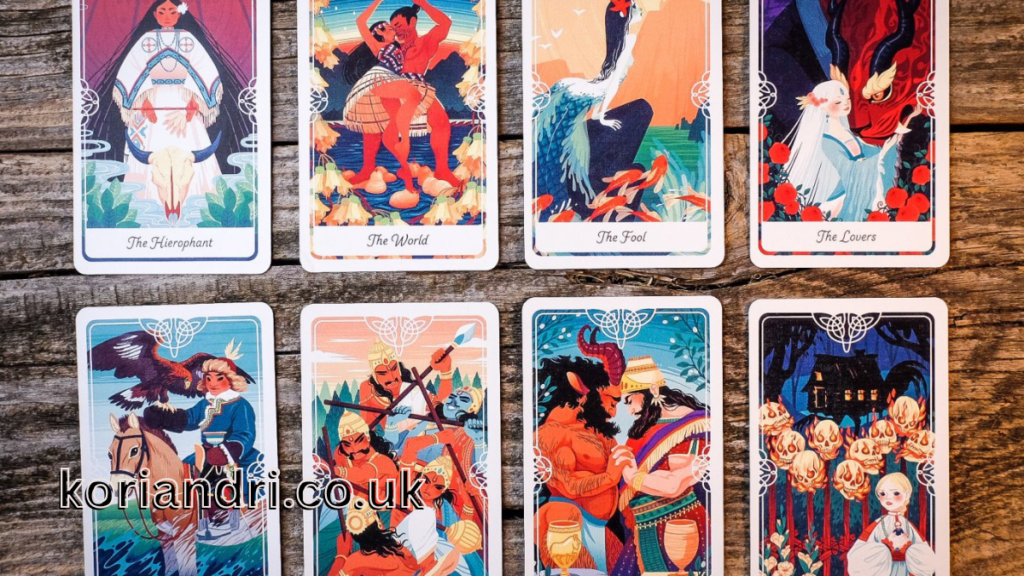

Tarot of the Divine is more than a tarot deck. It is a visual journey through myths, legends, and folklore from cultures around the world. Each card connects traditional tarot symbolism with powerful storytelling inspired by global tales. This fusion creates a deck that feels both spiritual and educational. Readers are not only interpreting cards but also discovering cultural narratives embedded in each illustration.
One of the main reasons this deck stands out is its deep respect for storytelling traditions. Instead of relying on generic imagery, the artwork reflects well-known folk tales, gods, heroes, and mythical creatures. This approach makes the deck meaningful for both beginners and experienced readers. It bridges spiritual practice with cultural awareness, offering insight beyond standard interpretations.
Another important aspect is accessibility. Tarot of the Divine allows users to explore tarot without feeling overwhelmed by complex symbolism. The imagery clearly represents characters and stories, making interpretations easier to understand. At the same time, advanced readers appreciate the depth behind each design. This combination of clarity and meaning makes the deck popular among modern tarot enthusiasts.
History and Background of Tarot of the Divine
Tarot of the Divine was created with the purpose of connecting tarot practice to global folklore traditions. The artist and creator carefully selected myths and legends from different regions to represent each card. The intention was not only artistic but also educational, introducing readers to cultural stories through spiritual symbolism.
The deck includes tales from various parts of the world, including Europe, Asia, Africa, and the Americas. Each card represents a specific mythological figure or legendary story that aligns with traditional tarot meanings. This approach highlights the universality of storytelling. Even though cultures differ, many themes such as love, transformation, sacrifice, and destiny appear repeatedly.
Popularity of this deck has grown quickly because readers appreciate its inclusivity and representation. Many people feel connected to seeing their cultural heritage reflected in tarot imagery. Others enjoy discovering myths they have never encountered before. This diversity adds value and encourages respectful learning about different traditions.
Over time, Tarot of the Divine has become more than just a divination tool. It is also used as a reference for mythology and folklore study. Teachers, spiritual practitioners, and art lovers often explore it as a creative way to understand storytelling across civilizations. Its impact continues to expand as more people recognize its cultural significance.
Structure and Design of the Deck
The structure of Tarot of the Divine follows the traditional tarot system while incorporating myth-based artwork. The deck contains the Major Arcana and Minor Arcana, each designed to represent well-known legends. The Major Arcana focuses on powerful archetypes and life lessons. The Minor Arcana reflects everyday experiences through symbolic storytelling.
The suits in the Minor Arcana maintain classic tarot categories but are illustrated with folklore-inspired imagery. Each suit represents different life areas such as emotions, action, intellect, and material aspects. The characters shown in these cards bring deeper meaning because they connect practical guidance with historical narratives. This combination strengthens interpretation and engagement.
The artwork plays a major role in defining the uniqueness of the deck. Every card features detailed illustrations inspired by myths and legends. The visual storytelling helps readers immediately understand the energy of the card. Instead of memorizing meanings, users can observe the scene and connect it to the symbolic lesson presented.
Compared to traditional tarot decks, Tarot of the Divine stands out for its educational value and artistic representation. It introduces cultural diversity in a respectful and meaningful way. The design is not random but carefully aligned with tarot symbolism. This thoughtful structure makes the deck powerful for reflection and spiritual growth.
Card Meanings and Interpretations

Understanding the card meanings in Tarot of the Divine requires attention to both tarot symbolism and mythological context. The Major Arcana cards often represent universal life themes such as change, guidance, challenges, and personal growth. Each character portrayed reflects a strong symbolic message connected to its story.
The Minor Arcana cards interpret daily experiences through folklore-inspired imagery. For example, a card may show a hero overcoming obstacles, symbolizing determination or resilience. By observing the myth behind the illustration, readers gain deeper insight into the card’s message. This storytelling method makes interpretation intuitive and engaging.
Upright and reversed meanings add another layer to readings. When a card appears upright, it often reflects balanced energy or positive expression of its theme. When reversed, it may suggest blocked energy, hidden challenges, or internal conflict. In this deck, reversed interpretations can also reflect distortion or misunderstanding of the mythic lesson.
Symbolism plays a crucial role in enhancing understanding. Colors, characters, animals, and landscapes all contribute to meaning. Readers who study the myth associated with a card can interpret it more accurately. This approach encourages research and curiosity, turning tarot reading into a learning experience.
How to Read Tarot of the Divine
Reading Tarot of the Divine begins with familiarizing yourself with the artwork and associated myths. Start by examining each card carefully. Notice the characters, expressions, environment, and symbolic objects. Ask yourself how the story relates to personal experiences or current life situations.
Beginners can start with simple spreads such as a one-card daily draw or a three-card spread for past, present, and future insight. These methods build confidence and improve interpretation skills. Over time, readers can experiment with more complex spreads to explore deeper questions. Consistent practice strengthens intuition and connection with the deck.
Intuition plays an important role in reading this deck. While guidebooks provide explanations, personal impressions matter as well. The images often trigger emotional or mental responses. Trusting those responses can lead to meaningful insights. Combining intuition with study creates balanced and powerful readings.
Avoid common mistakes such as overcomplicating interpretations or ignoring the story behind the artwork. Take time to understand the cultural background respectfully. This mindful approach ensures accurate readings and appreciation for the traditions represented.
Spiritual and Cultural Significance
Tarot of the Divine carries strong spiritual and cultural importance because it represents global storytelling traditions. It reminds users that wisdom exists across different civilizations. By including diverse myths, the deck promotes awareness and appreciation for cultural heritage.
Respectful interpretation is essential when using this deck. The myths depicted belong to real communities and historical traditions. Readers should approach them with curiosity and sensitivity. Understanding the origin of each story prevents misinterpretation and ensures ethical use of cultural symbolism.
Spiritually, the deck supports personal reflection and growth. Each card encourages users to examine life lessons through mythic perspective. The stories often highlight transformation, courage, love, and resilience. These themes resonate deeply with human experience and provide guidance during challenging moments.
Storytelling plays a powerful role in divination. Through narrative imagery, tarot becomes more than prediction. It becomes a mirror reflecting personal journeys through ancient wisdom. This connection between myth and self-discovery is what makes Tarot of the Divine meaningful for many practitioners.
Tarot of the Divine for Beginners vs Advanced Readers
Beginners benefit from this deck because the imagery clearly represents stories. Instead of memorizing abstract symbols, they can connect cards to recognizable legends. This visual storytelling makes learning tarot smoother and more engaging. It builds confidence quickly.
Advanced readers appreciate the depth behind the cultural references. They can explore symbolic layers, historical context, and myth comparisons. The deck allows detailed analysis and interpretation beyond surface meanings. Experienced practitioners often use it for deep spiritual readings or thematic exploration.
Professional readers may integrate this deck into their practice as a conversation starter. Clients often feel curious about the stories behind the images. This creates opportunities for discussion and insight. The deck supports both intuitive guidance and educational engagement.
Regardless of experience level, consistency and study improve accuracy. Regular practice with reflection on mythology strengthens understanding. Over time, readers develop stronger connections with both tarot principles and cultural narratives.
Conclusion
Tarot of the Divine combines tarot tradition with global folklore in a meaningful way. Its design celebrates cultural diversity while preserving core tarot symbolism. This balance makes it both spiritually powerful and visually inspiring. Readers gain insight into personal growth while exploring stories from around the world.
The deck is suitable for beginners who want clarity and for advanced practitioners seeking deeper symbolism. Its storytelling approach transforms tarot reading into an educational and reflective experience. Through myth and meaning, users discover guidance rooted in ancient wisdom.
Frequently Asked Questions (FAQs)
What makes Tarot of the Divine different from traditional tarot decks?
It connects tarot symbolism with global myths and legends through detailed storytelling artwork.
Is Tarot of the Divine suitable for beginners?
Yes, the clear imagery and story-based design make it easy to learn and interpret.
What cultures are represented in the deck?
The deck includes myths from Europe, Asia, Africa, the Americas, and other regions.
How do I start reading Tarot of the Divine effectively?
Begin with simple spreads, study the myths behind each card, and trust your intuition.
Can this deck be used for professional tarot readings?
Yes, many professionals use it because it encourages meaningful discussion and deep interpretation.
Also Read: zac efron prada ad